VideosHow Canonry works
From a question AI skips to a post your agent writes
Canonry finds the gap and writes a brief. Your agent drafts the post. You review and merge it.
Canonry finds a buyer question that AI answers without naming you, ranks it as a content target and writes a brief. Your own agent drafts the post from that brief as a pull request, and you review and merge it. Canonry writes the brief, not the post.
What the video shows
- A tracked question where AI answers without naming the business
- Canonry ranks it as a content target and writes a brief
- You tell your agent which one to write
- Your agent drafts the post as a pull request, with internal and external links
- You review and merge it, and the post goes live
- Your agent marks the target addressed in Canonry
On-screen text
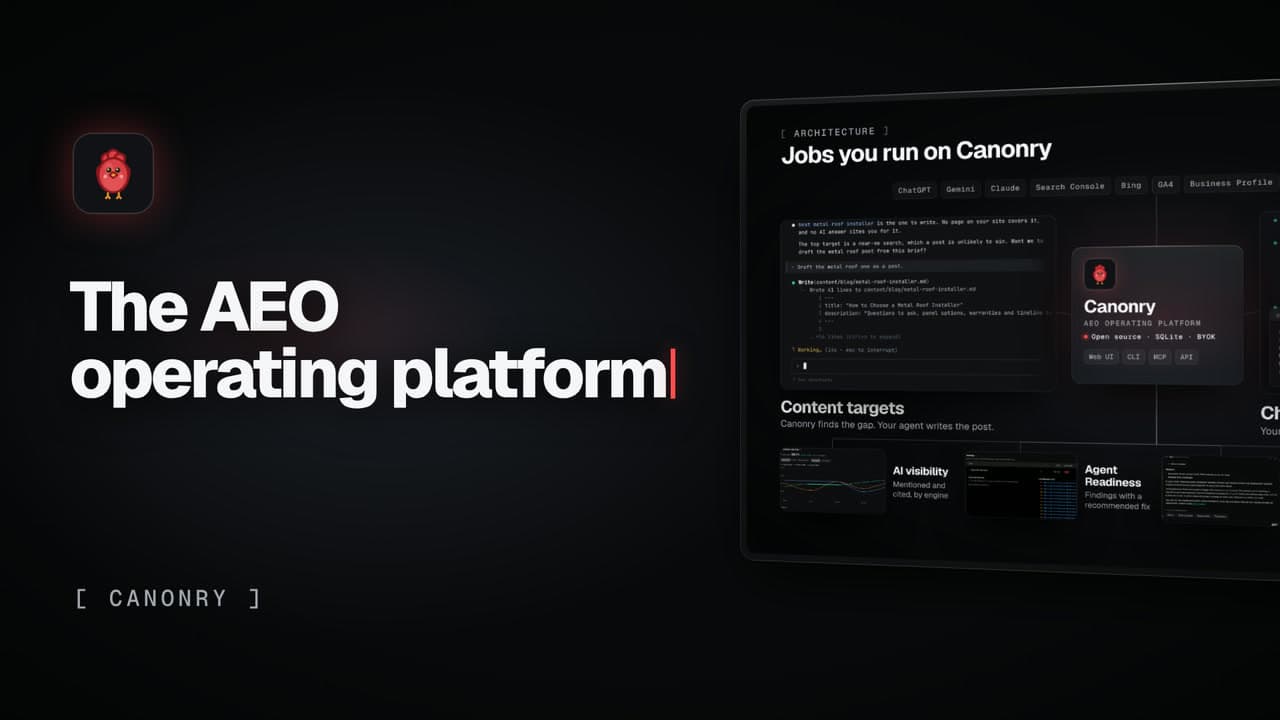
Jobs you run on Canonry
Content targets. Canonry finds the gap. Your agent writes the post.
AI visibilityAI answers this without naming you
Content targetsCanonry ranks it and writes a brief
Your callYou tell your agent which one to write
Your agentYour agent drafts it as a pull request
ReviewYou review and merge it
Your siteThe post is live
AddressedYour agent marks it done in Canonry
Canonry. The open-source AEO operating platform.
Run Canonry yourself
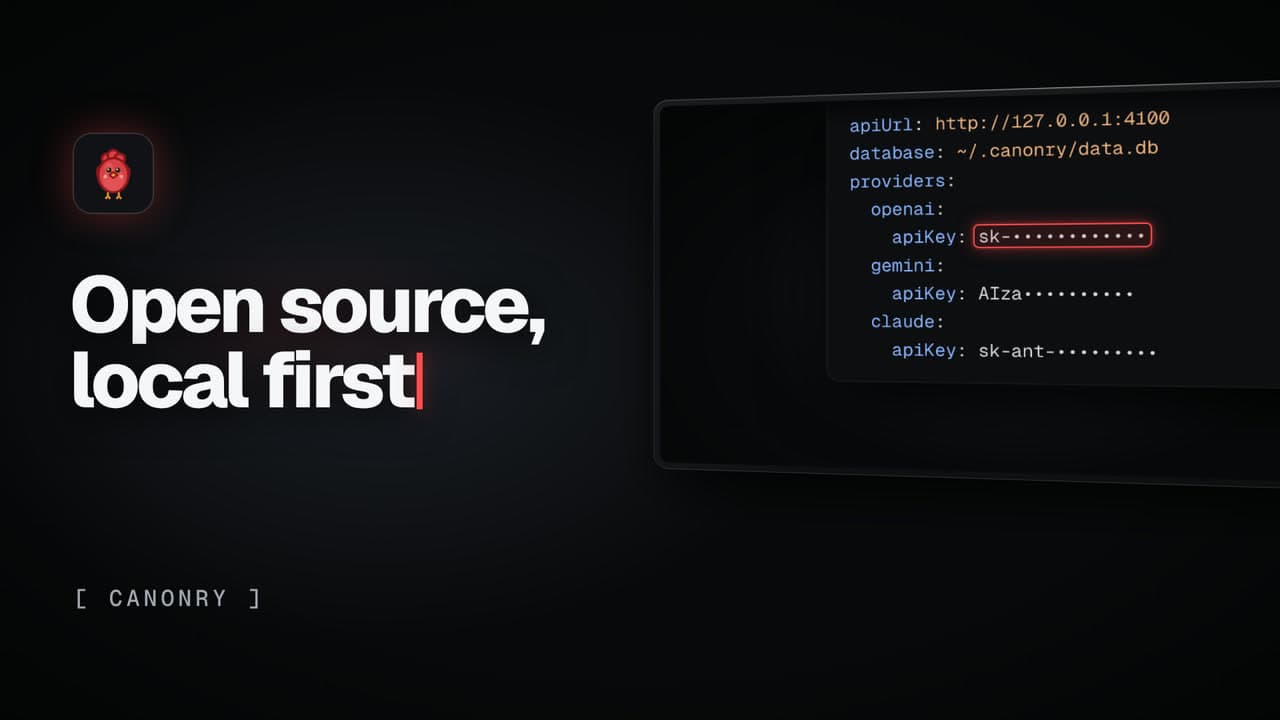
Canonry is free software (MIT). You pay your own AI providers for the answers it checks. Install it from npm, then run cnry bootstrap.
npm install -g @canonry/canonry