CLI commands
cnry runs --tail --format jsonOpen Source · Run It Yourself
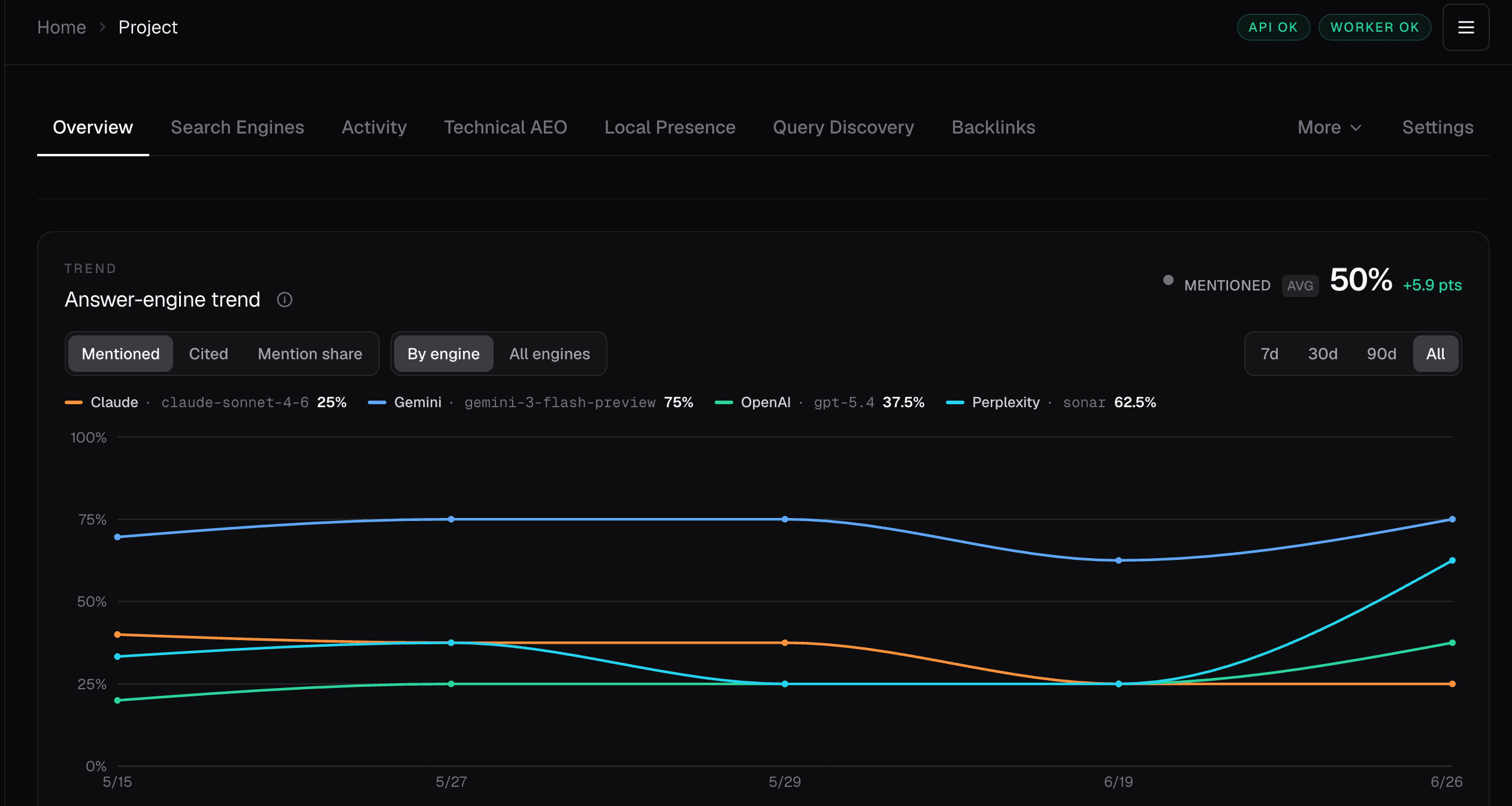
Track what ChatGPT, Claude, Gemini, and Perplexity say about your business alongside search and server data. Give your agent tools to make approved fixes.
Latest release v7.65.0. Your data, API keys, and server. Stored in SQLite.
brew tap canonry/canonrybrew install canonryThen run cnry init and cnry serve.
Your agent · Your computer
Connect with the command line, REST, MCP, webhooks, or a Codex or Claude Code plugin. AUQ, a SaaS SEO and AEO agency, reviewed these tools.
Choose the native plugin or standalone MCP. Do not use both at once. Plugin guide
codex plugin marketplace add Canonry/canonrycodex plugin add canonry@canonryFirst run cnry init --skip-skills --skip-mcp, then cnry start.
One Shared System
cnry runs --tail --format jsonGET /api/v1/citationstools/competitor_gapcitation.gainedCompare Your Results
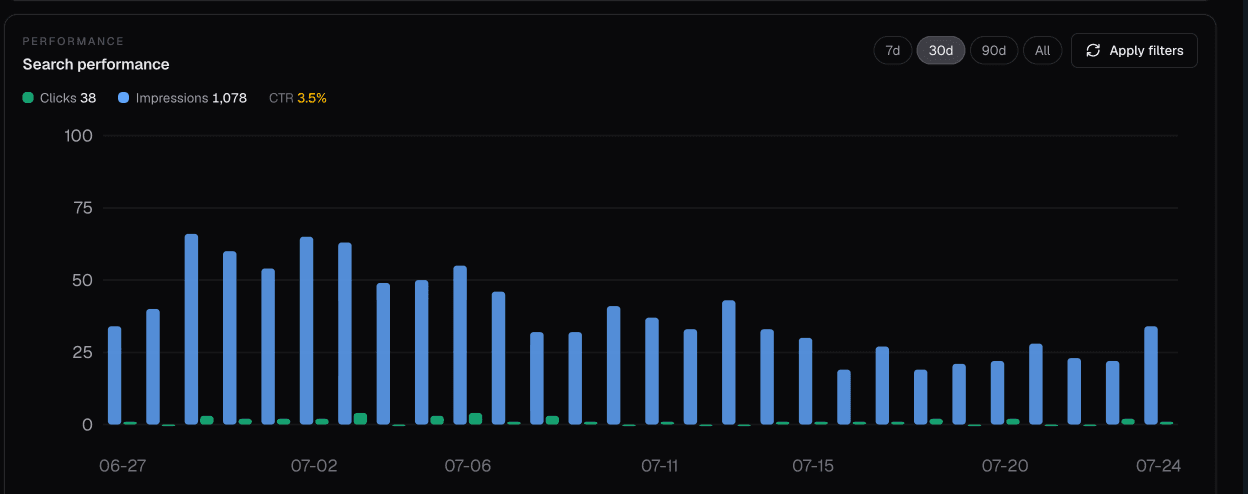
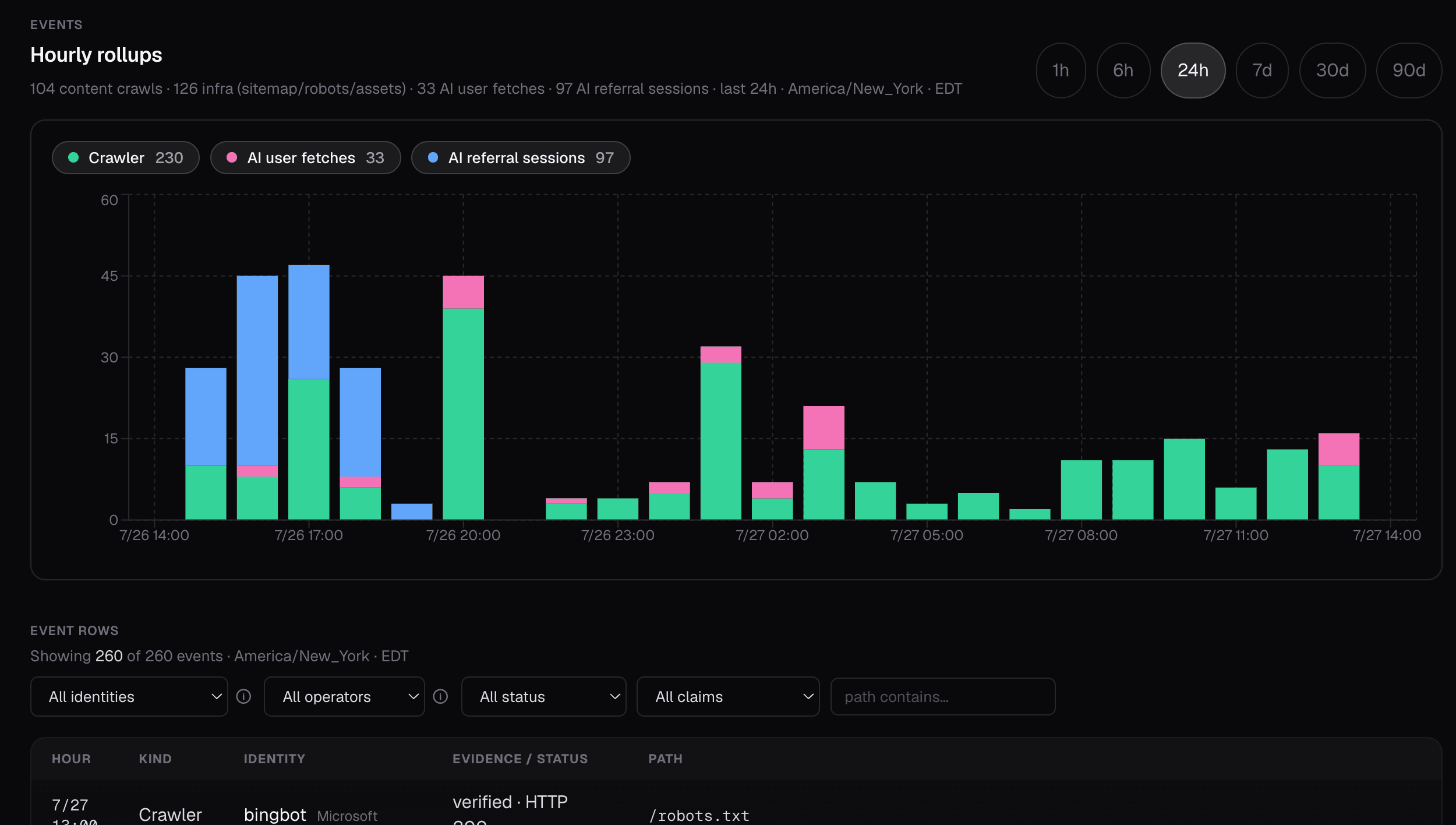
Match dates and URLs to look for patterns. These do not prove cause and effect. Server logs can show bot visits and clicks from AI that a browser tracking tag misses. The full walkthrough follows the steps from your first check to a client report.
Times shown · Clicks · Click rate
Bots · User visits · Clicks from AI
How Work Flows
What You Can Do
Two-Minute Tour
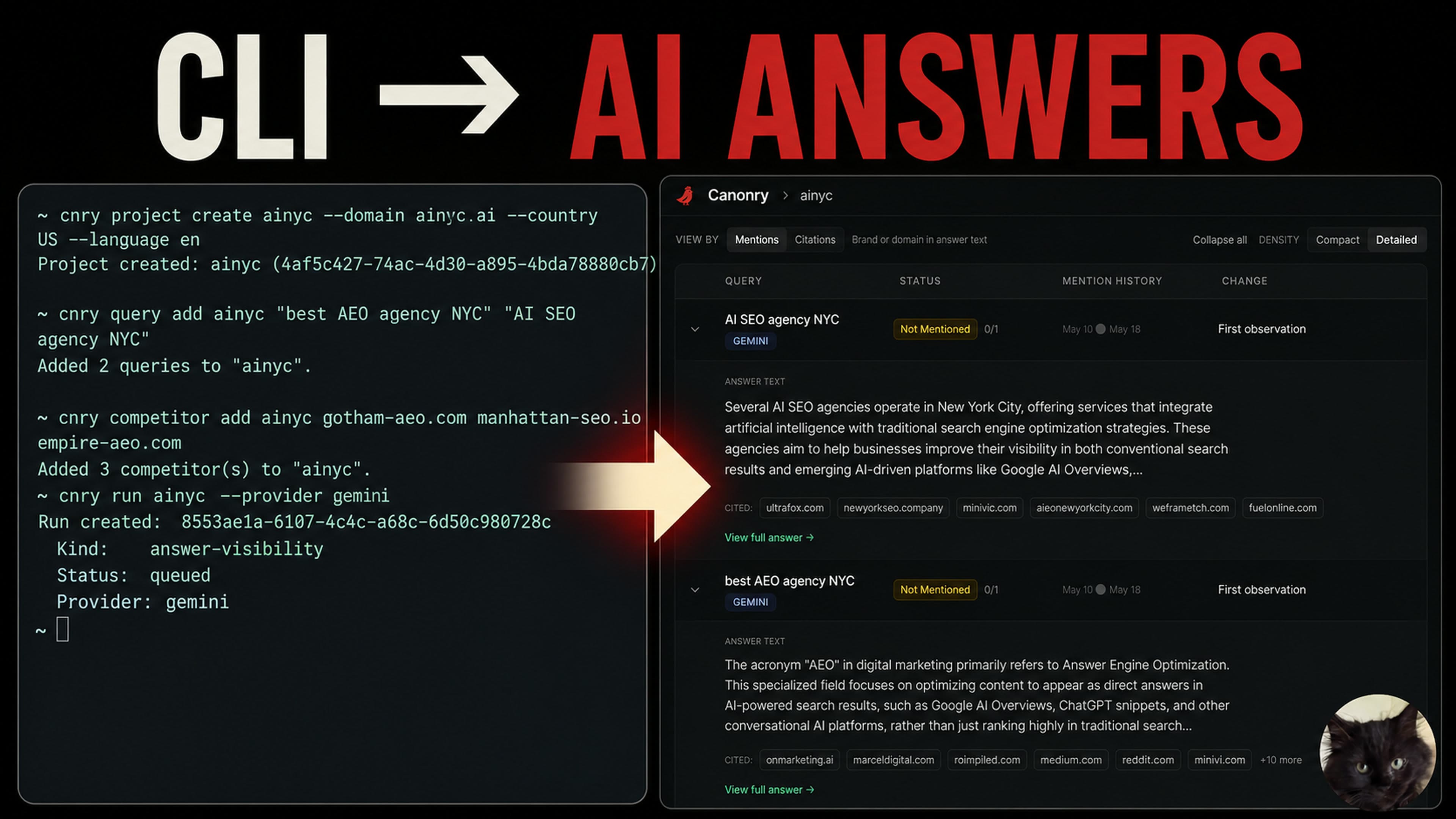 Watch on YouTube
Clear answers
Canonry tracks AI mentions and citations alongside search data, site traffic, and technical audits. Run it on your own server and use the web app, CLI, REST API, MCP tools, or webhooks. The source code is public.
No. Canonry gives your agent evidence, tools, spending limits, and approval checks through CLI, REST, MCP, webhooks, or a Codex or Claude Code plugin. Aero is the bundled agent.
You host Canonry for your own team. By default, project data lives in one SQLite file on your computer or server. You control API keys, backups, and where it runs.
Canonry supports Gemini, OpenAI, Claude, Perplexity, Meta's Muse Spark, and local models with OpenAI-compatible APIs. Optional browser checks capture supported AI apps when their answers differ from API results.
Codex and Claude Code can install the Canonry plugin. Other agents can use CLI commands with JSON output, a versioned REST API, or MCP tools loaded as needed. Signed webhooks can trigger work in other systems.
Yes. Read the code, issues, design, and guides on GitHub. The npm package is @canonry/canonry. Canonry 5.0 and later use the MIT license.
Open Source · Runs on Your Server
Install Canonry to check, fix, and track your own site.