You already pay to run the property and deliver the stay. When a guest books through an online travel agency (OTA), you also pay a commission for that booking. For hotels and short-term rentals, the challenge is bringing more guests to your own website without losing the demand OTAs provide.
I think AI search gives you another way to do that. A guest can describe the stay they want, find your property, and visit your site before opening an OTA. If they book direct at a lower acquisition cost, you retain more revenue and manage the guest relationship yourself.
Build a stronger direct booking channel
OTAs bring reach and a familiar checkout. Reaching those guests through your own site takes time and money, so the decision should come down to the value each channel brings.
But when one OTA brings most of your new guests, its choices affect your business. It can change its fees or how it shows your property. Giving guests a better stay won't always help the next person find you.
Your own website gives you more control. You choose how to describe the property, what packages to offer, and which booking engine to use. You can see which guest questions lead to bookings and use that information to improve the site and the stay.
The savings depend on the cost of each booking. Take a $1,000 reservation. Suppose the OTA commission is $150, while bringing in and processing the same booking yourself costs $60. You keep $90 more before paying for the stay itself. These are example costs, not standard industry fees.
A large discount or an expensive ad campaign can use up that $90. Count payment fees, your booking engine, guest support, and website costs too. Compare the same room type, dates, and cancellation terms across both channels.
You can use any savings to improve your margin, offer guests a better direct rate, or invest in the property. Keep the OTAs that bring you profitable stays while you build your own source of guests.
Reach guests before they choose an OTA
Imagine a guest asking for a quiet beach hotel with good restaurants a short walk away. Or a family looking for a three-bedroom rental with a fenced yard, two bathrooms, and a pool that suits young children.
They may not have picked a hotel brand or OTA yet. A page that answers their questions can help a search service find a property that fits.
Google says AI Mode can answer complex questions and compare options, with links to the websites it uses. It can run several related searches to form an answer. Your property pages can be among the sources it finds.
The guest asks AI for a stay that fits the trip.
The answer leads to your website.
The guest checks the property, price, and terms.
Your booking engine confirms the reservation.
OTAs are part of AI search too. Google's August 2026 hotel-booking announcement named both hotel chains and OTAs as partners, including Booking.com and Expedia. Its November update describes links to travel partners and booking within AI Mode for select U.S. properties in English.
So check where an answer sends the guest. An answer that links to an OTA still sends the guest there to book. A link to your own website gives the guest a chance to book with you.
I'd start working on that now, while keeping the partners that already bring in good business.
Make it easy to choose and book on your site
When a guest arrives from an AI answer, they should be able to check the property and their dates without starting over.
A hotel page needs clear room types, guest limits, location details, amenities, and policies. Explain access for guests with disabilities. Each rental needs its own page with bed layouts, bathrooms, parking, and pet rules. Include any limits or extra charges. If pool heating costs more, say so.
Those facts help people decide where to stay. They also give search tools details to use when comparing properties. A vague description of a luxury escape tells them much less.
Ask your website team to check that search services can find and read your property pages. Google says the usual SEO work also applies to its AI search features. Your team should handle that work while you confirm the property facts, policies, and offers. Google's guidance does not call for a separate set of AI-specific requirements.
The booking button should take the guest to the property they just chose. Show the full price and cancellation terms before they commit. Make it clear who runs the property and how to reach them, especially if checkout opens on a different website.
For a rental manager with fifty homes, sending someone back to the full list makes them repeat their search. Keep them on the home they picked. If their dates are full, explain that and offer suitable alternatives.
Check your other direct booking links as well. Google's Hotel Center guide explains how a hotel can show its website and direct booking links. These are separate from links in an AI answer. Both should lead to correct details and your booking engine.
Connect discovery to live rates and availability
A recommendation helps only if the guest can check the stay they want. Your booking engine needs to show current rates, room or property availability, and the full terms. An old rate in an AI answer is not a confirmed offer for their dates.
Ask your booking provider which AI booking services it supports, if any. A guest should be able to review the room, total price, and cancellation policy before confirming. The reservation must reach your booking system and return a confirmation. Those are the outcomes to check with your provider.
For a new hotel, include the website, booking engine, and reporting in the pre-opening plan and budget. Test them together before you spend on attracting guests. You want to know that someone who finds a room can book it and that your team can see where the booking came from.
For an existing hotel, start with one room category or guest segment. For a rental portfolio, start with one destination. Improve those pages and test their booking paths before expanding the work.
What we saw at Gjelina Hotel
Our Gjelina Hotel case study reports 90 visits from AI tools in October 2026. Of those, 86 came from ChatGPT. Google search clicks reached 1,220, up 30% from October 2025.
A separate Search Console view recorded 10.3K impressions under "Generative AI features (Beta)." That six-month view has date labels from May 18 to November 4, 2026.
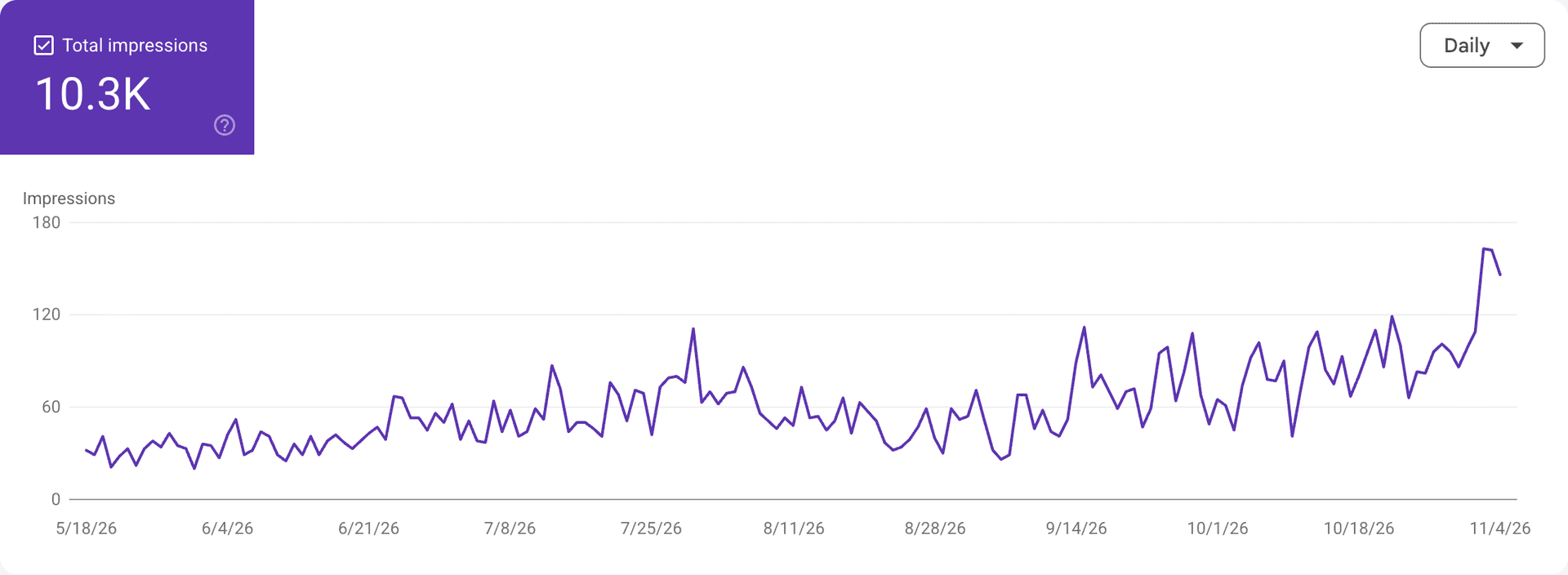
The figures show that people saw or visited the hotel through these channels. The case study does not give booking counts or margins. It also cannot tell us how much of the change came from our work. To judge the return, we need to see which visits led to confirmed stays.
Measure the bookings and what they cost
At Canonry, we manage the website, AI search visibility, social content, and reporting around your direct booking goals. We agree on the scope with your team, based on your properties and the systems you already use.
We keep room and property details up to date. We check which guest questions bring up the business in AI search and where the answers link. Local content and social posts help people learn about the property and reach its pages. We work with your team to check the path into your booking engine and report what guests do next.
Start with a small set of guest questions and record where you stand. Track property visits, date searches, checkout starts, and confirmed bookings. Where your systems allow it, match bookings to revenue, cancellations, discounts, and acquisition costs. Review your direct booking share and the revenue you retain from each channel.
Ask your website and booking providers to check that reports follow the guest through to confirmation, even when checkout opens on a separate site. Have them test a booking and show you the result in your reports.
You won't be able to trace every booking to its first source. Someone might research in an assistant, then search for the hotel by name days later. Keep what you can measure separate from what you think influenced the guest. Compare completed stays and costs over time. A new referral is not always new revenue.
Use those results to choose which pages to improve, which guests to focus on, and how much to spend. If your own site brings in profitable bookings, you have less reason to rely on one OTA.
Our work with hotels and short-term rental operators starts there: help more guests find your own site and give them a reason to book direct.